More than 2,700 years ago, Homer told the story of Odysseus, whose journey home was marked by one obstacle after another. Every time he overcame a challenge, another seemed to emerge on the horizon.
Looking back, commercial real estate has experienced a similar voyage.
Over the past decade, our industry has navigated disruption, uncertainty, changing technology, rising costs, evolving customer expectations, and shifting economic conditions. Yet through every challenge, the market adapted and moved forward.
Since joining Cushman & Wakefield | Edmonton in 2005, I’ve had the privilege of helping clients navigate many of these challenges firsthand. Some obstacles arrived suddenly, others developed gradually over time. All of them left a lasting impact on Edmonton’s commercial real estate market.
Here are twelve obstacles that shaped commercial real estate’s modern odyssey.
1. E-Commerce Disruption
The Challenge: The rise of online shopping fundamentally changed the retail landscape. Traditional retailers were forced to rethink store footprints, inventory strategies, and customer engagement.
Edmonton’s Response: While retail faced increasing pressure, industrial real estate benefited. Demand for warehousing, logistics facilities, and distribution space accelerated as businesses worked to move products more efficiently and closer to consumers. The growth of major logistics hubs in Northwest Edmonton and Nisku reflected the increasing importance of transportation corridors and efficient distribution networks throughout Western Canada.
2. The COVID-19 Pandemic
The Challenge: Virtually overnight, uncertainty replaced stability. Offices emptied, retailers faced restrictions, and many investment decisions were paused as businesses focused on navigating unprecedented circumstances.
Edmonton’s Response: The industry adapted quickly. Virtual tours became commonplace, businesses embraced flexibility, and industrial real estate emerged as one of the market’s strongest asset classes. Many Edmonton industrial occupiers accelerated expansion plans during and immediately following the pandemic as companies sought additional inventory storage and operational flexibility. Unlike Odysseus, we weren’t trapped on an island for seven years. Some weeks in 2020, however, felt remarkably close.
Some weeks in 2020 felt remarkably close to being stranded on an island.
3. Hybrid and Remote Work
The Challenge: The pandemic accelerated a workplace shift that permanently changed how many businesses view office space.
Edmonton’s Response: Occupiers became more selective, prioritizing quality over quantity. The market began rewarding buildings with better amenities, stronger locations, and more efficient layouts.
4. Rising Interest Rates and Inflation
The Challenge: After years of low borrowing costs, inflation surged and interest rates increased rapidly. Financing became more expensive, transactions slowed, and property values faced renewed scrutiny.
Edmonton’s Response: Investors became more disciplined. Underwriting standards tightened, and greater emphasis was placed on cash flow, tenant quality, and long-term fundamentals. Several owner-users who had planned acquisitions found themselves reassessing opportunities as borrowing costs increased dramatically. In many cases, lease-versus-own calculations changed substantially within a relatively short period. The cost of money became a major factor in nearly every real estate decision.
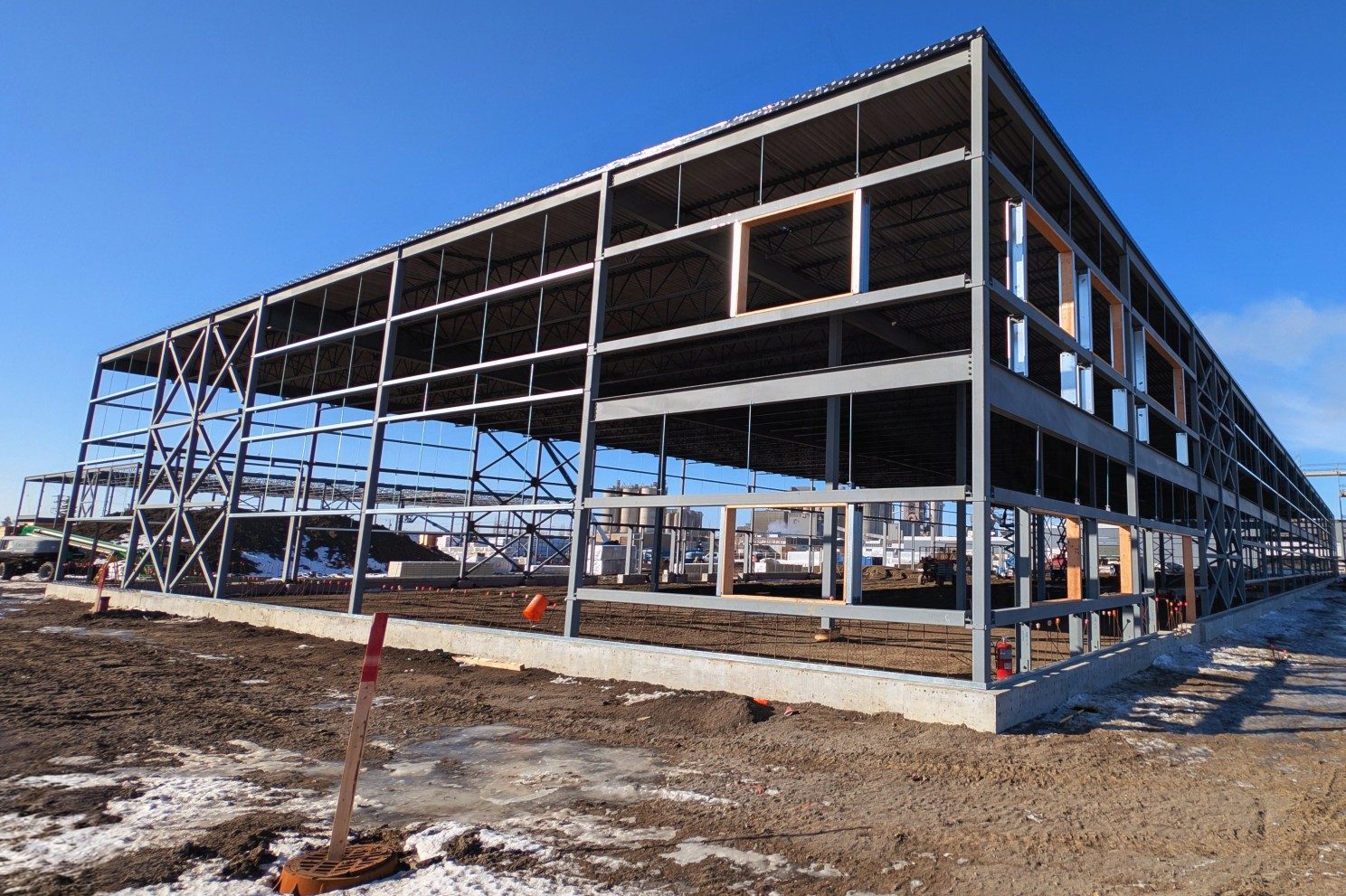
5. Supply Chain Disruptions
The Challenge: Global supply chains experienced significant disruptions, creating delays, shortages, and uncertainty across multiple industries.
Edmonton’s Response: Businesses sought additional inventory storage and greater operational flexibility. Demand for industrial warehouse space increased as occupiers prioritized resilience alongside efficiency. Rather than relying exclusively on just-in-time inventory strategies, many Edmonton-area businesses chose to maintain larger inventories, increasing demand for warehouse and yard space.
6. Sustainability and ESG Expectations
The Challenge: Over the past decade, sustainability expectations increasingly became part of the conversation among institutional investors, national developers, lenders, and large occupiers. Building owners were challenged to balance environmental objectives with financial realities.
Edmonton’s Response: The Edmonton market responded pragmatically. Owners invested in LED lighting upgrades, more efficient building systems, improved construction practices, and, in some cases, rooftop solar installations. Many discovered that sustainability initiatives could reduce operating costs while enhancing long-term asset value.
7. Labour Shortages
The Challenge: Finding skilled trades and construction workers became increasingly difficult, creating challenges for development timelines and project delivery.
Edmonton’s Response: Developers and contractors adapted through earlier planning, more disciplined project management, and longer-term workforce considerations.
Sometimes the challenge wasn’t finding capital. It was finding people.
8. Geopolitical Disruptions and Trade Uncertainty
The Challenge: Trade disputes, tariffs, geopolitical conflicts, and changing international relationships created uncertainty throughout global supply chains.
Edmonton’s Response: Many businesses reassessed sourcing strategies, inventory management practices, and warehouse requirements. Manufacturers and distributors serving Alberta and Western Canada increasingly explored ways to diversify suppliers and reduce reliance on any single geographic region or transportation route. Commercial real estate increasingly found itself influenced by events far beyond local market boundaries.
9. Scarcity of Industrial Product
The Challenge: In many markets, industrial demand outpaced available supply. Low vacancy rates and limited owner-user inventory created challenges for businesses seeking room to grow.
Edmonton’s Response: Developers responded with significant new construction activity, while investors increasingly prioritized industrial assets within their portfolios. At Cushman & Wakefield Edmonton, it became increasingly common to work with owner-users searching for industrial buildings to purchase only to discover that available inventory was extremely limited. In many situations, leasing opportunities substantially outnumbered ownership opportunities.
Ironically, one of the industrial market’s greatest challenges was its own success.
10. The Constant Need for Modernization
The Challenge: Industrial real estate continued to evolve. Higher clear heights, larger marshalling areas, greater power capacity, expanded trailer parking, and automation readiness became increasingly important requirements.
Edmonton’s Response: Owners invested in upgrades, while developers delivered a new generation of industrial buildings designed around modern operational requirements. Just a decade ago, 24-foot clear heights satisfied many industrial users. Today, many occupiers expect 32-foot to 40-foot clear heights, larger trailer storage areas, greater site coverage, and significantly higher power capacity than they did ten years ago. Much like Odysseus himself, standing still was never an option.
11. Rising Operating Costs and Property Taxes
The Challenge: Property taxes, insurance premiums, utilities, maintenance expenses, and improvement costs continued to rise. For many owners and occupiers, the cost of operating real estate became as important as the cost of acquiring it.
Edmonton’s Response: Owners focused on efficiency improvements while tenants paid greater attention to total occupancy costs. Property taxes have become a far more prominent topic in lease negotiations than they were ten years ago. Increasingly, tenants evaluate occupancy costs holistically rather than focusing solely on base rental rates.
Many conversations shifted from “What is the rent?” to “What is the true cost of occupying the space?”
12. Regulatory Complexity
The Challenge: Development approvals, permitting requirements, building codes, and compliance obligations became increasingly complex and time-consuming.
Edmonton’s Response: Successful projects required more planning, more collaboration, and greater patience than ever before. Whether developing industrial properties in Edmonton, Nisku, Acheson, or neighbouring municipalities, approval timelines, servicing requirements, and development obligations have become increasingly important considerations throughout the planning process. At times, navigating the approval process felt almost as challenging as developing the project itself.
Lessons From the Journey
Looking back, many of these challenges weren’t isolated events. One often created the conditions for the next.
The pandemic disrupted supply chains. Supply chain disruptions increased demand for industrial space. Labour shortages affected development timelines. Rising costs influenced investment decisions.
For market participants, the challenge wasn’t simply overcoming one obstacle. It was adapting to several at the same time.
- Adaptability matters more than prediction.
- Strong market fundamentals continue to win over time.
- Every challenge creates an opportunity for someone willing to adapt.